Why Are Police Officers and Firefighters at Higher Risk for Vein Disease?
- Advanced Medical & Diagnostic Center
- September 6, 2026
- 10 min read
Vein treatment
Table of Contents
- 1. Why Varicose Veins in First Responders Are More Common Than You Think
- 2. The Specific Occupational Factors Working Against Your Veins
- 3. Why You Might Be Ignoring the Warning Signs
- 4. Early Symptoms You Should Not Brush Off
- 5. What Happens If You Leave It Untreated
- 6. Why Getting Evaluated Early Matters for Active Duty
- 7. What You Can Do Between Shifts to Support Your Vein Health
- 8. What to Expect at Your Vein Evaluation
- 9. Frequently Asked Questions
- 10. What to Do Next
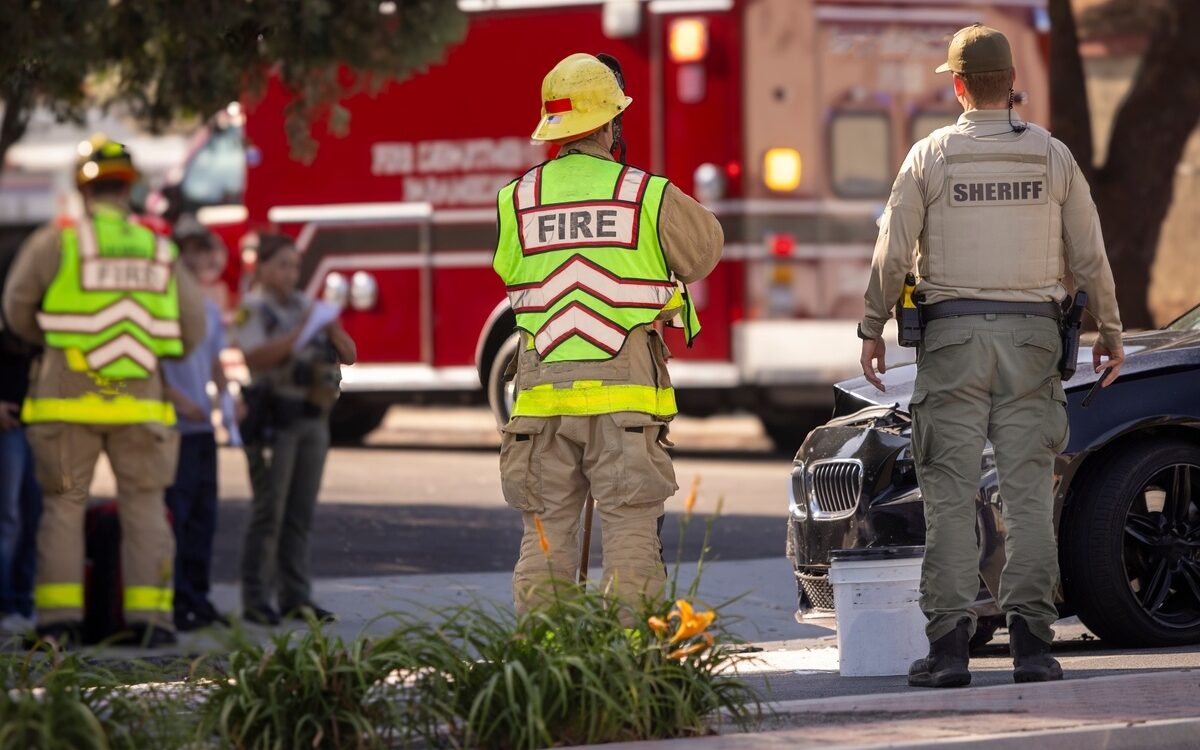
If you are a police officer, firefighter, or EMS worker, your body absorbs a level of physical stress most jobs never come close to. Long shifts, tactical gear, hours on your feet or behind the wheel, and calls that never come on a predictable schedule all take a toll. One thing that often gets overlooked in the middle of all that is your vein health. Varicose veins in first responders are more common than you might think, and the reasons behind it are well understood.
1. Why Varicose Veins in First Responders Are More Common Than You Think
Vein disease happens when the one-way valves inside your leg veins weaken and start letting blood flow backward instead of moving it efficiently toward your heart. That backward flow causes blood to pool in your lower legs, building pressure that stretches your vein walls over time. According to the National Heart, Lung, and Blood Institute, this valve dysfunction is the underlying mechanism behind most cases of varicose veins. The nature of first responder work brings several of these risk factors together at once, often for years without you realizing it is happening.
What makes your situation different from a typical office job is the combination of physical demands you are exposed to on a regular basis. Most people who develop vein disease deal with one or two contributing factors. You are more likely dealing with several at the same time, shift after shift, for the length of your career. That layered exposure is exactly why vein disease shows up earlier and progresses faster in first responder populations compared to the general public.
2. The Specific Occupational Factors Working Against Your Veins
- Standing for long stretches — Whether you are on patrol or staged at a scene, standing still puts more pressure on your leg veins than walking does
- Sitting for long stretches — Long shifts in a patrol vehicle limit the calf muscle activity your body relies on to push blood back up toward your heart
- Heavy gear — Turnout gear, duty belts, and body armor add sustained weight and pressure across an entire shift
- Rotating schedules — Irregular hours and overnight shifts cut into the recovery time your venous system needs between physically demanding days
- Heat exposure — If you work near high heat sources, the vasodilation that comes with it adds extra strain to vein valves that are already under pressure
Any one of these on its own can contribute to venous insufficiency. Combine several of them, repeated over years on the job, and you have a real risk factor that most desk-based professions simply do not deal with. The CDC’s National Institute for Occupational Safety and Health has reviewed the evidence linking prolonged standing at work to serious health outcomes, including vein-related conditions.
3. Why You Might Be Ignoring the Warning Signs
You are trained to push through discomfort, so it makes sense that early vein symptoms do not register as anything worth mentioning. That ache or heaviness at the end of a shift feels like ordinary fatigue, not a medical issue. You might also be holding back because of what a diagnosis could mean for your fitness-for-duty status. The problem is that vein disease is progressive, and every month you put off checking it out is a month the underlying condition has to get worse.
There is also a practical barrier that has nothing to do with denial. Between rotating shifts, mandatory overtime, and unpredictable call volume, finding time for a medical appointment that feels optional is genuinely difficult. Symptoms that would send someone in an office job to a doctor within a week can go unaddressed for years in this line of work simply because the schedule never seems to line up. That delay is understandable, but it is also the reason so many first responders end up dealing with more advanced vein disease than they would have if the evaluation had happened earlier.
4. Early Symptoms You Should Not Brush Off
- Visible bulging or rope-like veins on your legs
- Aching or throbbing that gets worse as your shift goes on
- Swelling around your ankles or lower legs
- A heavy, tired feeling in your legs that eases when you elevate them
- Leg cramps at night
If these symptoms stick around after your shift ends instead of fading with rest, that is your cue to get checked out.
5. What Happens If You Leave It Untreated
Vein disease will not resolve on its own, and putting off an evaluation gives it room to progress into more advanced, harder-to-treat territory, including skin changes, venous ulcers, and blood clots. This is one of the biggest reasons varicose veins in first responders tend to reach a more advanced stage before treatment even starts. If you want the full picture of how this progresses, our breakdown of what happens if you leave varicose veins untreated walks through every stage, from early changes to complications that need more involved care.
6. Why Getting Evaluated Early Matters for Active Duty
Because vein disease gets worse the longer it goes unaddressed, waiting until your symptoms are severe usually means a longer, more complicated treatment path. A duplex ultrasound can catch valve dysfunction long before it is visible on the surface, which means you get access to earlier, less invasive treatment. Board-certified vein treatment gives you a clear diagnosis and a plan built around your job, including minimal downtime and scheduling that actually works with your shift rotation.
7. What You Can Do Between Shifts to Support Your Vein Health
While an evaluation is the only way to know exactly what is happening in your veins, there are habits you can build into your routine that ease the pressure on your legs between shifts. None of these replace a medical evaluation if you are already experiencing symptoms, but they can slow the progression of mild vein strain and make your legs feel noticeably better at the end of a long day.
- Wear graduated compression socks on shift. Compression socks apply gentle, consistent pressure that helps push blood back up your legs instead of letting it pool. Many first responders find they make a real difference by the end of a 12-hour shift.
- Elevate your legs when you get home. Propping your legs above heart level for 15 to 20 minutes after a shift helps drain pooled blood and reduce end-of-day swelling.
- Move your calves during long stretches of standing or sitting. Simple ankle pumps or shifting your weight periodically keeps your calf muscles engaged, which supports the natural pumping action that pushes blood toward your heart.
- Stay hydrated throughout your shift. Dehydration thickens your blood slightly, which makes it harder for your circulatory system to keep blood moving efficiently.
- Avoid crossing your legs for extended periods. This habit restricts blood flow in already strained veins, particularly during long stretches in a vehicle.
If you are already noticing symptoms like heaviness, visible veins, or swelling despite these habits, that is a sign the underlying condition needs more than lifestyle adjustments. At that point, an evaluation is what actually addresses the source of the problem rather than just managing the symptoms around it.
8. What to Expect at Your Vein Evaluation
A vein evaluation at Advanced Medical and Diagnostics Center is a straightforward, non-invasive process designed to give you clear answers before anything gets scheduled. Because varicose veins in first responders are so closely tied to occupational demands, your provider will factor your job and shift schedule into the conversation from the start.
Your health history and a physical exam. Your provider will ask about your symptoms, your job demands, and your family history, then examine the affected veins directly.
Duplex ultrasound. This imaging study shows your provider how blood is flowing in real time, identifies which veins have valve dysfunction, and reveals whether what you are seeing on the surface is connected to something deeper.
Your personalized treatment plan. Your provider walks you through what your results mean and lays out the treatment options that make sense for your situation and your schedule.
For more on what to expect and how to book, visit our vein treatment in Hackensack NJ page.
9. Frequently Asked Questions
Yes. Standing for long periods, sitting for long periods, heavy gear, irregular shifts, and heat exposure are all established risk factors, and first responder work tends to combine several of them at once.
If you leave it untreated, vein disease can progress to the point where swelling, pain, and other symptoms start affecting your mobility and stamina on shift. Getting evaluated early is generally a much better path than waiting until it starts interfering with your work.
Not always. While some spider veins are purely cosmetic, varicose veins and chronic venous insufficiency are medical conditions caused by valve dysfunction. Left alone, they can progress to complications like skin changes, ulcers, and blood clots, which is why an evaluation matters even if the veins do not bother you visually.
Vein disease does not always show up on the surface right away. You can have significant valve dysfunction with heaviness, swelling, or aching and no visible veins at all. A duplex ultrasound is the only reliable way to know what is happening beneath the surface, regardless of what you can or cannot see.
No. You can contact our office directly to schedule your evaluation.
Most vein procedures are minimally invasive, done in-office under local anesthesia, and require little to no downtime. We also offer Saturday appointments if weekday visits do not work with your schedule.
10. What to Do Next
Vein disease is manageable when you catch it early. If your job depends on you being physically ready for whatever comes up during a shift, taking care of vein symptoms now protects both your long-term health and your ability to do your job well.
Schedule your vein evaluation at our Hackensack or Wayne, NJ office. No referral needed.
Key Takeaways
- Standing, sitting, heavy gear, and rotating shifts put first responders at higher risk for vein disease
- Early symptoms are easy to write off as normal fatigue, which lets the condition progress
- Left untreated, vein disease can lead to skin changes, ulcers, and blood clots
- Duplex ultrasound can catch valve dysfunction before it is visible, opening the door to earlier, less invasive treatment
- Most vein procedures require little to no downtime and can work around your shift schedule
IF LEG HEAVINESS OR SWELLING HAS QUIETLY BECOME SOMETHING YOU JUST WORK AROUND, THAT IS YOUR SIGNAL.
A board-certified provider can find out what is actually going on and walk you through your options, from the first conversation about your symptoms to a clear diagnosis backed by duplex ultrasound. You will leave your evaluation knowing exactly what is happening in your veins and what your next step looks like, whether that means monitoring, lifestyle adjustments, or a minimally invasive procedure built around your schedule. There is no reason to keep guessing about something your body has already been telling you for a while.
Disclaimer: The information in this article is for educational purposes only and does not constitute medical advice, diagnosis, or treatment recommendations. Vein disease varies significantly between individuals based on cause, duration, severity, and underlying health status. All decisions regarding vein evaluation and treatment should be made in consultation with a board-certified physician familiar with your complete medical history and individual health circumstances.