
Vein Treatment in North New Jersey | AMDC
Varicose veins and other vein disorders are more than a cosmetic concern. They are often a sign of an underlying circulatory condition known as chronic venous insufficiency, which can cause persistent leg pain, swelling, skin damage, and reduced quality of life when left untreated. Advanced Medical & Diagnostic Center specializes in radiofrequency vein ablation and other minimally invasive treatments that target the root cause of vein disease, restore healthy blood flow, and help you get back to living without discomfort. We offer vein treatment in Hackensack, NJ for Bergen County patients and vein treatment in Wayne, NJ for Passaic County patients. We also serve patients at our new East Orange, NJ office in Essex County.
Understanding Vein Conditions
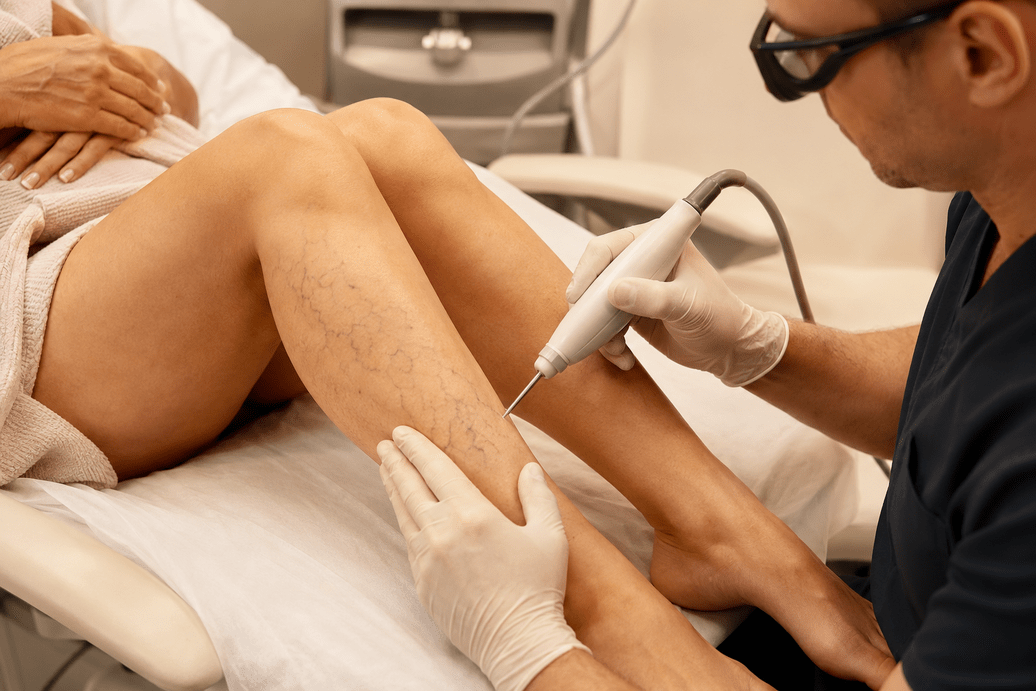
Healthy veins contain one-way valves that keep blood moving toward the heart. When these valves weaken or fail, blood flows backward and collects in the veins of the lower legs, a condition known as chronic venous insufficiency (CVI). Over time, this sustained pressure causes veins to stretch, swell, and become visible beneath the skin. Without treatment, CVI can progress from mild discomfort to serious complications.
Common vein conditions include:
- Varicose veins are enlarged, twisted veins caused by damaged valves that let blood pool. They often cause aching, heaviness, and throbbing, especially after standing or sitting.
- Spider veins are small red, blue, or purple veins near the skin's surface. They may cause mild discomfort and can be a sign of underlying vein disease.
- Chronic venous insufficiency (CVI) is the poor blood flow in the veins that causes most varicose and spider veins. It can lead to swelling, skin changes, and slow-healing leg ulcers.
- Superficial thrombophlebitis is a blood clot in a vein near the skin's surface, causing redness, warmth, tenderness, and swelling. It may increase the risk of deeper vein problems if untreated.
Why Vein Treatment Shouldn't Wait
Many patients live with vein symptoms for years, assuming the condition is cosmetic or that discomfort is a normal part of aging. In reality, vein disease is progressive. What begins as occasional heaviness or visible veins can advance to chronic pain, skin breakdown, and complications that require more extensive intervention. Seeking treatment early is important because:
- Vein valve damage does not reverse on its own. Once valves lose their ability to prevent backflow, symptoms will continue to worsen without medical intervention.
- Chronic blood pooling places sustained pressure on surrounding tissue, eventually causing the skin near the ankles to darken, thicken, and become fragile. These changes can become permanent if treatment is delayed too long.
- Venous stasis ulcers, the most serious complication of untreated CVI, are painful open wounds that develop on the lower legs. They are notoriously difficult to heal and carry a high risk of recurrence without proper vein treatment.
- Untreated varicose veins increase the likelihood of superficial thrombophlebitis, which causes pain and inflammation and can, in some cases, extend to involve deeper veins.
- Early-stage vein disease responds well to minimally invasive procedures like radiofrequency ablation, allowing patients to avoid more complex treatments that may become necessary as the condition advances.
Reasons to Schedule a Vein Evaluation
Visible varicose veins or spider vein clusters that are spreading or worsening over time
Persistent leg pain, heaviness, or throbbing that intensifies after standing or sitting for extended periods
Ankle or lower leg swelling that improves overnight but returns each day
Skin discoloration, dryness, or hardening near the ankles
Nighttime leg cramps, restless legs, or itching and burning around visible veins
A personal or family history of blood clots, deep vein thrombosis, or chronic vein disease
Our Primary Approach
Radiofrequency Vein Ablation
Radiofrequency vein ablation (RFA) is the cornerstone of our vein treatment program at Advanced Medical & Diagnostic Center. RFA is a clinically proven, minimally invasive procedure that uses controlled radiofrequency energy to close malfunctioning veins from the inside, allowing your body to naturally reroute blood through healthier vessels. It is widely regarded as one of the most effective and well-tolerated treatments available for varicose veins and chronic venous insufficiency.
How Radiofrequency Ablation Works
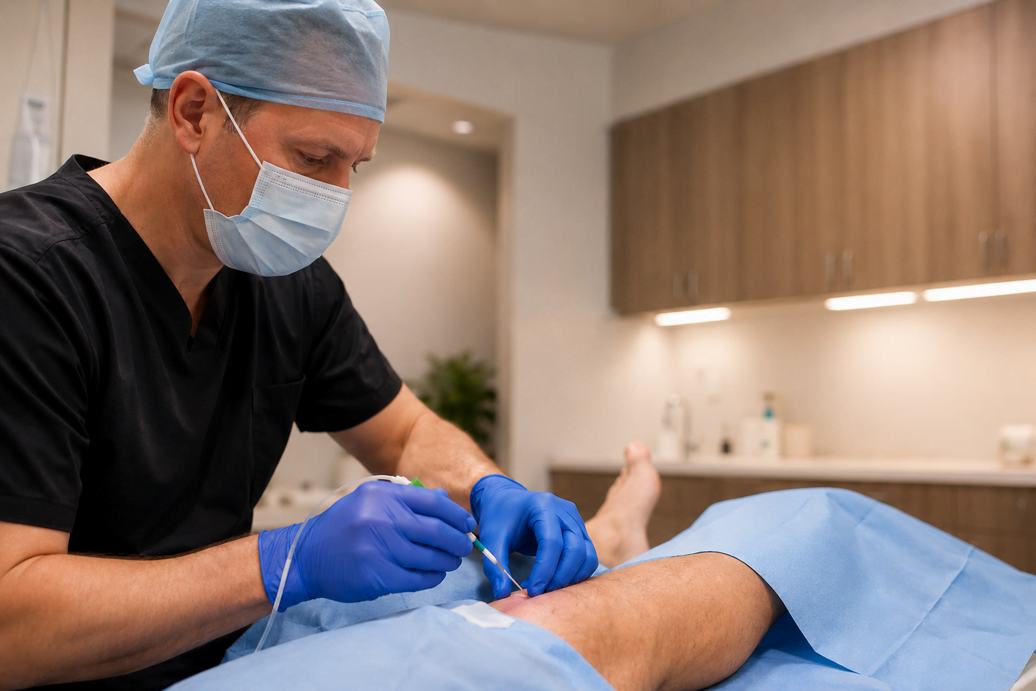
During the procedure, your provider uses duplex ultrasound imaging to visualize the affected vein in real time. A thin catheter is inserted into the vein through a small entry point, typically near the knee. Once positioned, the catheter delivers targeted radiofrequency energy that heats the vein wall, causing it to collapse and seal shut. The sealed vein is gradually absorbed by the body over the following weeks, and blood flow is redirected through surrounding healthy veins.
The entire procedure is performed in-office under local anesthesia. Most patients experience only mild pressure or a brief warming sensation during treatment. There are no surgical incisions, no general anesthesia, and no hospital stay required.
Precision
Ultrasound guidance allows your provider to target the exact source of valve dysfunction with a high degree of accuracy, treating the root cause rather than symptoms alone
Proven Results
Clinical studies demonstrate long-term vein closure rates exceeding 95%, making RFA one of the most reliable treatments available for venous insufficiency
Patient Comfort
RFA uses steady, controlled thermal energy rather than the higher-intensity pulses associated with some laser-based approaches, resulting in less post-procedure bruising and tenderness for most patients
Minimal Downtime
The majority of patients return to normal daily activities within one to two days, with no restrictions on walking or light movement immediately after the procedure
Additional Treatment Options
While radiofrequency ablation is our primary approach for treating varicose veins and venous insufficiency, we offer a full range of minimally invasive options to address different types and severities of vein conditions. Your provider may recommend one or more of the following treatments in conjunction with or as an alternative to RFA, depending on your diagnostic ultrasound findings and individual needs.
- Endovenous Laser Ablation (EVLA): Uses focused laser energy delivered through a thin fiber to heat and close damaged veins. Like RFA, laser ablation is catheter-based and performed under ultrasound guidance, making it an effective alternative for certain vein anatomies.
- VenaSeal Closure System: A non-thermal option that uses a medical-grade adhesive to seal the walls of affected veins together. VenaSeal does not require tumescent anesthesia (the numbing fluid injected around the vein), which means fewer needle sticks and a comfortable experience for patients who prefer to avoid heat-based treatments.
- Sclerotherapy: Involves injecting a specialized solution directly into spider veins or smaller varicose veins, causing them to collapse, fade, and be reabsorbed by the body over several weeks. Sclerotherapy is commonly used to treat spider veins and as a follow-up to ablation procedures for remaining smaller vessels.
- Ambulatory Phlebectomy: A technique used to remove surface-level varicose veins through tiny micro-incisions that typically require no stitches. Ambulatory phlebectomy is often performed alongside ablation procedures to address bulging veins that are visible at the skin's surface.

What to Expect After Your Vein Procedure
Recovery from radiofrequency ablation and other minimally invasive vein treatments is straightforward. Most patients leave our office and resume light activities the same day. Here is what you can expect during the recovery period:
- Compression Stockings: You will be asked to wear medical-grade compression stockings for a period determined by your provider, typically one to two weeks. Compression supports healing by promoting healthy blood flow and reducing swelling at the treatment site.
- Walking and Movement: Walking is encouraged immediately after the procedure. Regular light movement throughout the day helps maintain circulation and supports the body's natural healing process. Most patients can return to work and daily routines within one to two days.
- Activity Restrictions: Strenuous exercise, heavy lifting, and prolonged hot baths or sauna use should be avoided for approximately one to two weeks following treatment. Your provider will give you specific guidance based on the procedure performed.
- Normal Post-Procedure Sensations: Mild soreness, tightness, or bruising along the treated vein is common and typically resolves within one to two weeks. Over-the-counter pain relievers are usually sufficient for managing any discomfort.
An estimated 40 million adults in the United States are affected by varicose veins, yet many delay seeking treatment because they assume the condition is purely cosmetic. Early evaluation and intervention can prevent symptoms from progressing and significantly improve quality of life.
Frequently Asked Questions
Vein treatment refers to a range of minimally invasive procedures designed to address varicose veins, spider veins, and the underlying venous insufficiency that causes them. These procedures work by closing, sealing, or removing damaged veins so that blood can be rerouted through healthier vessels. At Advanced Medical & Diagnostic Center, vein treatments are performed in-office using local anesthesia and advanced imaging guidance.
Varicose veins develop when the one-way valves inside your veins weaken or malfunction, allowing blood to flow backward and accumulate in the vessel. Over time, this pooling causes the vein to stretch, bulge, and become visible beneath the skin. Spider veins form through a similar mechanism but affect smaller blood vessels closer to the surface. Contributing factors include age, genetics, pregnancy, prolonged standing or sitting, obesity, and hormonal changes.
You should consider scheduling a vein evaluation if you experience persistent leg heaviness or fatigue, aching or throbbing in the calves, swelling in the ankles or lower legs, nighttime leg cramps or restless legs, itching or burning around visible veins, or skin discoloration near the ankles. These symptoms often indicate that vein valve dysfunction is affecting your circulation and may worsen without treatment.
Advanced Medical & Diagnostic Center offers several treatment options depending on the severity and location of your vein condition. Radiofrequency ablation and endovenous laser ablation use targeted energy to seal larger varicose veins from the inside. VenaSeal uses a medical adhesive to close affected veins without thermal energy. Sclerotherapy involves injecting a solution into smaller veins to collapse them. Ambulatory phlebectomy removes surface-level varicose veins through small incisions. Your provider will recommend the best approach based on your diagnostic ultrasound results.
Most patients report minimal discomfort during and after treatment. Procedures are performed using local anesthesia, and many patients describe the sensation as mild pressure or a brief warming feeling. Post-procedure soreness is typically manageable with over-the-counter pain relievers and compression stockings. The majority of patients return to their regular activities within one to two days.
Most in-office vein procedures take between 30 and 60 minutes, depending on the type of treatment and the number of veins being addressed. Because these are outpatient procedures, you can typically drive yourself home afterward and resume daily activities the same day or the following day.
Treated veins are permanently closed or removed and will not return. However, it is possible for new varicose veins to develop over time if you have ongoing risk factors such as a genetic predisposition, prolonged standing, or lifestyle factors that contribute to venous insufficiency. Periodic follow-up evaluations can help identify any new vein issues early and keep your results on track.
Many insurance plans cover vein treatment when it is deemed medically necessary, which is often the case when varicose veins cause symptoms such as pain, swelling, skin changes, or ulceration. Cosmetic-only spider vein treatments may not be covered. Our team can help verify your insurance benefits and explain your coverage options before scheduling a procedure.